

Long Lasting Battery Phones That Keep You Connected
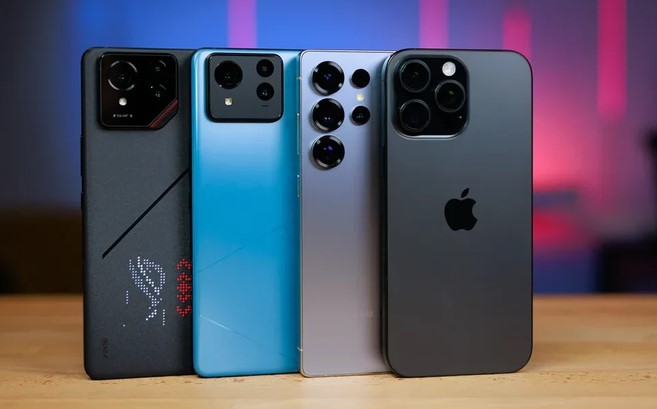
Source:https://suncomltd.com
Picture this: You are halfway through an urgent business trip, navigating an unfamiliar city using GPS, taking back-to-back client calls, and responding to Slack messages. Suddenly, your screen dims, a red battery icon flashes 1%, and the phone dies completely. No power bank nearby, no outlet in sight.
That sudden wave of panic is something I have felt more times than I care to admit during my early years as a hardware analyst. Over a decade of testing mobile hardware taught me one harsh reality: a smartphone loaded with bleeding-edge features is completely useless the moment its battery dies.
Fortunately, mobile technology has hit a massive turning point. The industry is moving past the era where we had to choose between a ultra-thin design and multi-day battery performance. If you are tired of living tethered to a wall charger, this deep dive breaks down how long lasting battery phones keep you effortlessly connected—and how to choose the right one for your daily workflow.
The Anatomy of Modern Power: Beyond the Milliampere-Hour (mAh)
For years, consumers evaluated power based on a single metric: battery capacity, measured in milliampere-hours (mAh). Conventional wisdom suggested that a 5,000 mAh battery automatically outperformed a 4,000 mAh alternative.
In real-world testing, that assumption fails constantly.
[Raw Capacity (mAh)] + [Chipset Efficiency (nm)] + [Display Tech (LTPO)] = Actual Screen-On Time
To understand why some phones run for two days straight while others drain by dinnertime, we must look at the three-pillar ecosystem:
-
Silicon-Carbon Anode Technology: Older lithium-ion batteries hit a physical ceiling regarding energy density. Modern flagships leverage silicon-carbon anodes, packing 15% to 20% higher energy density into thin chassis without adding weight.
-
Chipset Fabrication Lithography: Processors built on 3nm or 4nm architecture draw significantly less current during active operations.
-
LTPO Display Controllers: Displays account for up to 60% of total power consumption. Low-Temperature Polycrystalline Oxide (LTPO) panels dynamically adjust refresh rates—dropping down to 1Hz when viewing static text and scaling up to 120Hz during intense scrolling.
Industry Insight: Think of mAh as the capacity of a car’s fuel tank, and the processor/display as the engine. A high-performance V8 engine paired with a massive fuel tank drains just as fast as a tiny tank paired with a high-efficiency hybrid engine. True longevity relies on fuel efficiency, not just tank size.
Top Categories of Long Lasting Battery Phones
Different lifestyles demand different hardware profiles. Here is how current market offerings break down for everyday users:
| Smartphone Category | Typical Battery Capacity | Average Screen-On Time (SOT) | Ideal Target User |
| Silicon-Anode Endurance Flagships | 6,500 mAh – 7,500 mAh | 13 – 18 Hours | Power users, frequent travelers, mobile gamers |
| Optimized Efficiency Flagships | 4,800 mAh – 5,000 mAh | 11 – 14 Hours | Corporate professionals, content creators |
| Budget & Mid-Range Stamina | 5,500 mAh – 7,000 mAh | 14 – 20 Hours | Commuters, field workers, budget-conscious buyers |
1. High-Density Flagships
Manufacturers utilizing advanced silicon-carbon chemistry are placing massive capacities—ranging from 6,500 mAh to 7,500 mAh—into standard-sized devices. These devices deliver two full days of moderate-to-heavy use on a single charge.
2. Software & Hardware Efficiency Champions
Certain manufacturers achieve stellar battery scores without physically inflating the battery cell. By writing aggressive background task managers and pairing them with highly efficient silicon processors, these models pull 12 to 14 hours of continuous screen-on time from modest 5,000 mAh capacities.
3. Mid-Range Powerhouses
Mid-tier processors naturally consume less power than desktop-class flagship chips. When manufacturers pair these mid-range processors with massive battery cells, the result is an unbeatable endurance option that lasts well past 48 hours without breaking the bank.
Software Settings That Multiply Battery Life
Hardware accounts for half the equation; system configuration controls the rest. Implementing proper power management settings extends operational time dramatically without sacrificing connectivity:
-
Enable Adaptive Brightness & LTPO Refresh Rates: Let the onboard light sensor and display controller handle luminance. Manual maximum brightness drains power faster than any background app.
-
Audit Background App Refresh: Social platforms and messaging apps maintain active server pinging. Restrict background activity for non-essential applications in your device settings.
-
Utilize Dark Mode on OLED Screens: On OLED displays, black pixels turn off completely, drawing zero power. Dark mode cuts display power consumption by up to 30% under regular use.
-
Manage 5G Connectivity: In areas with poor cellular coverage, 5G modems constantly scale power consumption up to reach distant cell towers. Switching to 4G LTE in low-signal zones preserves significant power reserves.
Pro Tip vs. Hidden Pitfall
💡 Pro Tip: The 20-80 Charging Rule
Modern lithium-based batteries experience chemical stress when held at absolute capacity extremes. To slow down physical degradation over a 3-to-4-year ownership cycle, use integrated battery settings to stop charging automatically at 80% or 85% overnight.
⚠️ Hidden Pitfall: Fast Charging Heat Degradation
Ultra-fast charging tech (80W to 120W+) is incredibly convenient when running low on time. However, high wattage generates localized thermal buildup. Excessive heat degrades battery chemical health over time. Avoid gaming or running heavy navigation tasks while using high-wattage fast chargers.
The Verdict: Staying Connected Without Power Anxiety
Finding the right long lasting battery phones requires looking beyond basic marketing claims. Prioritize devices that balance high-density cell architecture, modern process nodes, and smart display tech. When your smartphone comfortably survives two full days of demanding workloads, power anxiety disappears, letting you focus entirely on your work, travel, and personal connections.
What is your record for the longest time a phone has survived on a single charge? Are you prioritizing ultra-fast charging or raw battery size for your next upgrade? Let’s discuss in the comments below!