

AI and Natural Language Processing: Understanding Human Speech
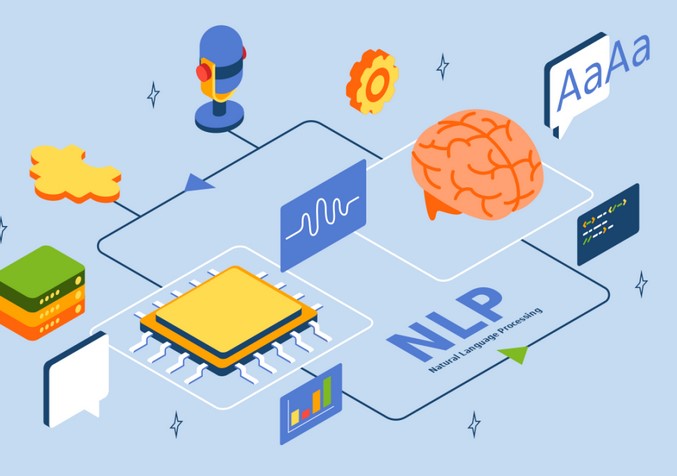
Source:https://media.licdn.com
Imagine standing in the middle of a bustling Tokyo street market. You don’t speak a word of Japanese, but you need to find a specific herbal remedy for a persistent cough. You pull out your phone, speak a complex sentence in English, and within milliseconds, a voice breathes back perfect Japanese to the merchant. The merchant smiles, nods, and hands you exactly what you need.
In my ten years navigating the intersection of healthcare and deep tech, I have witnessed many “miracles,” but few feel as intimate as the evolution of AI and natural language processing. I remember the early days of 2016, where voice assistants would struggle to understand a simple “Set an alarm.” Today, in 2026, we are at a point where AI doesn’t just hear our words; it understands our sarcasm, our hesitation, and even the subtle emotional distress in a patient’s voice during a tele-health screening.
This article is a deep dive into the “brain” of modern communication tech. We’re going to explore how machines learned to talk, why human speech is so difficult to decode, and where this journey is taking us next.
The Complexity of Human Talk: Why Machines Used to Fail
To understand the leap we’ve taken, we have to look at why human speech is a nightmare for traditional computers. Computers love logic. They love “If X, then Y.” Human language, however, is a chaotic mess of slang, regional accents, and homonyms (words that sound the same but mean different things).
Think of AI and natural language processing as a master chef trying to recreate a secret family recipe.
-
The Ingredients (Words): On their own, they are just data points.
-
The Recipe (Syntax): The rules of grammar that tell you how to combine them.
-
The Taste (Semantics): This is the hardest part. Just like a chef knows that “a pinch of salt” varies depending on the dish, an AI must learn that “That’s sick!” could mean a medical emergency or a very cool guitar solo, depending on the context.
The Mechanics of How AI Finds Meaning
Modern NLP doesn’t look at words as letters anymore; it looks at them as mathematical coordinates in a massive, multi-dimensional space.
From Keywords to Transformers
In the old days, software looked for “keywords.” If you said “headache,” it gave you a link to aspirin. Today, we use Transformer models. This architecture allows the AI to look at an entire sentence at once, rather than word-by-word. It weighs the importance of each word relative to the others—a process we call “Attention.”
The Power of Large Language Models (LLMs)
By feeding billions of pages of text into these neural networks, the AI begins to predict the next logical word in a sequence. But it’s more than just a fancy autocomplete. In my time working with health-tech startups, I’ve seen LLMs identify early signs of cognitive decline simply by analyzing the “word density” and sentence structure of a person’s casual speech.
LSI Keywords: Machine learning, tokenization, neural networks, sentiment analysis, speech-to-text, context windows, semantic search.
Why AI and Natural Language Processing is a Game Changer in 2026
We have moved past simple chatbots. Here is how NLP is actually shifting the needle in the real world:
-
Real-Time Medical Scribes: Doctors used to spend 40% of their day typing notes. Now, ambient NLP “listens” to the patient-doctor conversation, filters out the small talk about the weather, and automatically populates a clinical summary with 99% accuracy.
-
Breaking the Literacy Barrier: In many parts of the world, people cannot read or write but can speak fluently. NLP-driven voice interfaces are allowing millions to access banking and government services for the first time.
-
Sentiment and Mental Health: Sophisticated AI and natural language processing can now detect “vocal biomarkers.” A slight change in pitch or a slowing of speech tempo can alert a caregiver to potential depression or anxiety before the patient even realizes it.
Scannable Breakdown: The Core Stages of NLP
To process your “Hey Siri” or “Hey Gemini” request, the AI goes through these rapid-fire steps:
-
Tokenization: Breaking the sentence into smaller chunks (tokens).
-
Part-of-Speech Tagging: Identifying which words are nouns, verbs, or adjectives.
-
Named Entity Recognition (NER): Identifying specific people, places, or brands.
-
Sentiment Analysis: Determining if the speaker is happy, angry, or confused.
-
Natural Language Generation (NLG): Formulating a human-like response.
Expert Advice: Navigating the AI Era
Through my decade in tech, I’ve learned that the most “intelligent” systems are still prone to very human-like errors. Here is my perspective on how to handle this tech:
Tips Pro: Context is King
When interacting with AI, remember that it doesn’t have “lived experience.” If you are using an NLP tool for translation or professional writing, always provide the Persona and Goal. Telling the AI, “You are a cardiologist talking to a 5-year-old,” will yield a much better result than just saying, “Explain heart surgery.”
The Privacy Trade-off
Here is the “insider” truth: for AI and natural language processing to get better, it needs to listen. Many users don’t realize that their “private” voice logs are often used for training. Always check your “Activity Controls” and opt-out of human review features if you are discussing sensitive medical or financial data.
The Future: Beyond Translation to True Understanding
We are currently entering the era of Polyglot AI. We aren’t just translating English to Spanish anymore; we are translating “Brain Signals to Speech” for those with paralysis, and “Image to Description” for the visually impaired.
In my professional opinion, the next five years won’t be about making AI smarter—it will be about making it more empathetic. We are moving away from robotic responses toward systems that understand nuance, culture, and the “unspoken” parts of human communication.
Conclusion
AI and natural language processing has turned the world’s oldest tool—language—into its newest frontier. We have successfully taught machines not just to mimic our sounds, but to navigate the labyrinth of human meaning. This technology is no longer a luxury; it is the fundamental interface of the future, breaking down barriers between languages, disabilities, and even between humans and the digital world.
How has voice tech changed your daily routine? Do you trust an AI to “read between the lines” of your conversations, or does the idea of a listening machine still feel a bit too much like science fiction? Let’s talk about it in the comments below!