Technology Blog

Portable Chargers for Smartphones and Laptops
Source:https://s.yimg.com

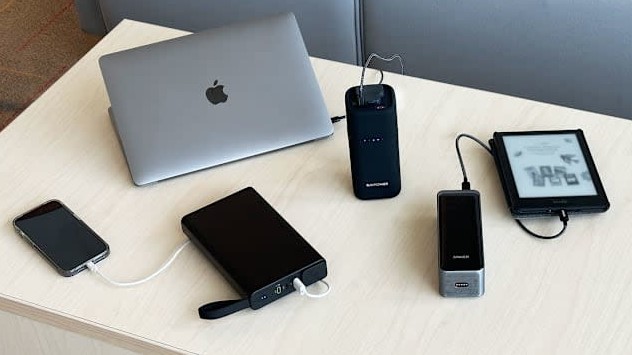
In today’s hyper-connected world, portable chargers have become indispensable tools for keeping smartphones, laptops, and other devices powered throughout the day. Whether commuting, traveling, or working remotely, running out of battery can disrupt productivity, communication, and access to important information. Portable chargers offer a convenient solution by providing on-the-go power, ensuring devices remain functional even when traditional electrical outlets are unavailable. This article explores the technology behind portable chargers, their essential features, and why they are critical for modern mobile lifestyles.

1. How Portable Chargers Work

Portable chargers, also known as power banks, are essentially rechargeable batteries designed to store electrical energy and release it to connected devices. They use advanced battery technology, typically lithium-ion or lithium-polymer cells, which provide high energy density while remaining lightweight and compact. These batteries can store enough energy to charge smartphones multiple times and, in higher-capacity models, even power laptops or tablets.

The key to a portable charger’s functionality is its voltage regulation circuitry. This ensures that the energy discharged matches the voltage and current requirements of the connected device, preventing damage while optimizing charging speed. Many modern portable chargers are equipped with multiple output ports and support fast-charging protocols such as USB Power Delivery (PD), Qualcomm Quick Charge, or proprietary high-speed charging systems. This allows simultaneous charging of multiple devices while minimizing downtime.

Portable chargers also feature input ports for recharging their internal batteries. Depending on the model, they can be recharged via USB, USB-C, or even solar panels in outdoor-oriented devices. The recharge speed, measured in watts or amperes, affects how quickly the charger itself can be ready for reuse, which is an important consideration for frequent travelers.

2. Key Features and Advantages

Capacity and Portability

Battery capacity, typically measured in milliampere-hours (mAh) or watt-hours (Wh), is the most crucial factor when selecting a portable charger. Low-capacity chargers (5,000–10,000 mAh) are lightweight and ideal for topping up smartphones during the day. Higher-capacity chargers (20,000 mAh or more) can fully charge laptops or multiple devices without needing frequent recharging themselves.

Portability is equally important. Modern chargers are designed to balance size, weight, and battery capacity. Slim, compact models easily fit in backpacks, purses, or even pockets, making them convenient for travel, commuting, or outdoor activities. Materials and design also contribute to durability, with many devices featuring shock-resistant or heat-resistant construction.

One Subheading: Safety, Efficiency, and Smart Technology

Safety is a critical aspect of portable chargers. High-quality models include protections against overcharging, overheating, short circuits, and voltage spikes, safeguarding both the charger and the connected devices. Efficiency is another factor—modern chargers convert stored energy with minimal loss, allowing maximum utilization of the battery for faster, more reliable charging.

Smart technology is becoming increasingly common. Intelligent circuitry can detect the device type and adjust output power for optimal charging. LED indicators or digital displays show remaining battery levels and estimated charge times. Some chargers even feature wireless charging pads, enabling cable-free operation for compatible smartphones. Other innovative designs incorporate solar panels for off-grid charging or pass-through charging that allows the charger to be powered while simultaneously charging devices.

3. Use Cases and Practical Benefits

Portable chargers are invaluable across a variety of scenarios. Business professionals rely on them to keep smartphones, tablets, and laptops powered during travel, long meetings, or remote work sessions. Travelers benefit from the flexibility of portable chargers when outlets are unavailable in airports, hotels, or outdoor locations. Students and remote workers use them to maintain connectivity in libraries, coffee shops, or co-working spaces, ensuring devices remain functional throughout the day.

Portable chargers also enhance safety and preparedness. In emergencies, such as power outages or natural disasters, having a charged device can be crucial for communication and accessing vital information. They reduce dependence on disposable batteries and frequent outlet charging, promoting energy efficiency and sustainability.

Looking ahead, future portable chargers are likely to feature higher energy densities, faster charging protocols, multi-device wireless charging, and deeper integration with smart devices and ecosystems. These advancements will make portable chargers even more essential for daily life, ensuring that users remain connected and productive under any circumstances.

Portable chargers are no longer optional accessories—they are essential tools for maintaining connectivity and productivity in today’s mobile-centric world. By combining high capacity, safety features, intelligent technology, and portability, they allow smartphones, laptops, and other devices to remain operational anytime, anywhere. As battery technology and charging standards continue to evolve, portable chargers will become even more versatile, efficient, and indispensable, solidifying their role as vital companions for professionals, travelers, students, and everyday users alike.
Smart Home Hubs: Controlling Devices Seamlessly

Source:https://blog-cdn.athom.c

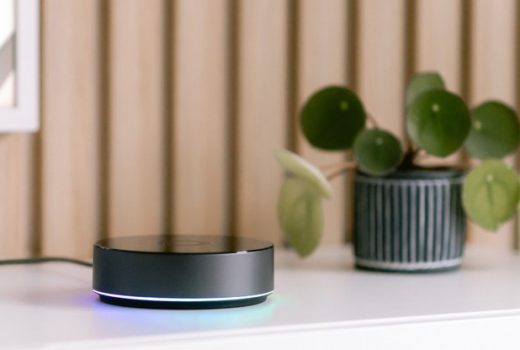
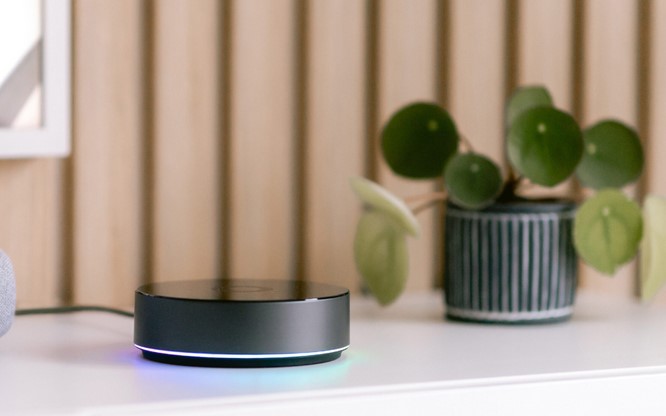
In the age of connected living, smart home hubs have emerged as the central command centers for managing a wide array of smart devices. From lighting and thermostats to security systems and entertainment units, these hubs allow users to integrate and control technology seamlessly from a single interface. As homes become more automated, smart home hubs are essential for simplifying device management, enhancing convenience, and creating an intelligent, interconnected environment. This article explores the role of smart home hubs, their core features, and how they are shaping the future of residential automation.

1. Understanding the Role of Smart Home Hubs

Smart home hubs function as the bridge between different smart devices, enabling them to communicate with each other and with users through centralized control. Unlike standalone devices that require separate apps or controls, a hub consolidates commands, making it easier to automate routines and manage complex setups.

These hubs operate using a variety of communication protocols such as Wi-Fi, Zigbee, Z-Wave, and Bluetooth. By supporting multiple protocols, smart home hubs can integrate diverse devices, including smart locks, sensors, cameras, and voice assistants, regardless of brand. This cross-device compatibility ensures that users can expand their smart ecosystem without worrying about interoperability issues.

Automation is another key advantage of smart home hubs. Users can create schedules, conditional triggers, or “scenes” that coordinate multiple devices. For example, a single command like “Good Night” could turn off lights, lock doors, adjust thermostats, and arm security systems. This level of integration simplifies daily routines, enhances energy efficiency, and improves home security.

The hub’s ability to centralize control is especially beneficial for households with multiple users or large numbers of smart devices. It reduces clutter from numerous apps, decreases the learning curve for new devices, and provides a single point of management for the entire home environment.

2. Core Features and Capabilities

Modern smart home hubs offer a range of features designed to make home automation intuitive, efficient, and responsive. Understanding these capabilities helps homeowners select the right hub for their needs.

Device Integration and Compatibility

The most critical function of a smart home hub is its ability to integrate and manage various devices. Whether it’s lighting, heating, security, or entertainment systems, a hub ensures that devices can communicate and operate together. Compatibility with multiple brands and protocols is essential for future-proofing, allowing homeowners to expand their ecosystems without being locked into a single manufacturer.

One Subheading: Automation, Voice Control, and Remote Management

Automation is at the heart of smart home hub functionality. Advanced hubs allow users to set rules based on time, location, or device status. For instance, lights can turn on automatically when someone enters a room, or the thermostat can adjust based on occupancy and outside weather conditions. These automated routines increase convenience and reduce energy consumption.

Voice control is another major feature. Many smart home hubs integrate with popular voice assistants, enabling hands-free operation. Users can issue commands, check device status, or trigger routines simply by speaking. This hands-free control is particularly useful for accessibility purposes or multitasking scenarios.

Remote management is equally important, especially for those who travel frequently. Mobile apps connected to the hub allow users to monitor and control devices from anywhere in the world. Whether adjusting home temperature before returning from a trip or checking on security cameras, remote access provides peace of mind and greater control over the living environment.

Additional features often include energy monitoring, notifications for unusual activity, and integration with third-party services like weather updates or smart appliances. These capabilities further enhance the utility of smart home hubs, making them central to a connected and intelligent home.

3. Benefits and Future Potential

Smart home hubs offer tangible benefits in terms of convenience, security, and energy management. Centralized control reduces the complexity of managing multiple devices, allowing users to focus on lifestyle improvements rather than technology management. Automated routines improve efficiency, minimize human error, and can lead to significant energy savings.

Security is another critical advantage. By integrating cameras, motion sensors, door locks, and alarm systems, smart home hubs provide a coordinated defense system that can detect and respond to threats in real time. Alerts, remote monitoring, and automated responses improve overall safety for residents.

Looking forward, the future of smart home hubs will likely involve deeper integration with artificial intelligence and machine learning. Hubs may learn user behavior over time, optimizing routines, predicting needs, and even suggesting energy-saving actions. Interoperability with emerging technologies like augmented reality interfaces or advanced health monitoring devices could further enhance convenience and lifestyle management.

Additionally, cloud-based connectivity will enable hubs to integrate more seamlessly with external services and data sources. Predictive analytics, environmental monitoring, and proactive maintenance alerts are just some of the potential advancements that could transform smart home hubs into true central intelligence systems for modern homes.

Smart home hubs are transforming the way people interact with their living environments, providing centralized control, automation, and enhanced security for a variety of devices. By enabling seamless integration, voice and remote control, and intelligent automation, these hubs simplify daily routines and optimize home efficiency. As technology evolves, smart home hubs are poised to become even more intelligent, adaptive, and indispensable, making them the cornerstone of truly connected and convenient modern living.

Applications of Quantum Physics in Modern Technology

Source:https://www.azoquantum.com

The applications of quantum physics have moved far beyond theoretical discussions in academic journals and are now shaping many of the technologies that define modern life. Once considered an abstract branch of science concerned only with subatomic particles, quantum physics has become a practical foundation for innovation across computing, communication, healthcare, and energy systems. This article introduces how quantum principles are being applied in real-world technologies, explains the mechanisms behind their impact, and highlights why quantum-driven solutions are essential for future technological progress.

1. Quantum Foundations Behind Everyday Technologies

Quantum physics governs the behavior of matter and energy at atomic and subatomic scales. Concepts such as superposition, wave-particle duality, and quantization may seem abstract, but they directly influence how modern devices operate. Many technologies that people use daily would not exist without an understanding of quantum mechanics.

Semiconductors are a prime example. The operation of transistors, which form the backbone of all modern electronics, relies on quantum behavior within solid materials. Quantum tunneling and energy band theory explain how electrons move through semiconductor materials, enabling the precise control of electrical currents in microprocessors and memory chips.

Another foundational application is laser technology. Lasers function by stimulating atoms to emit coherent light through quantum transitions between energy levels. This precise control of photons enables applications ranging from barcode scanners and optical storage devices to medical procedures and industrial manufacturing.

Quantum physics also underpins modern imaging technologies. Magnetic resonance imaging (MRI), for instance, relies on quantum properties of atomic nuclei interacting with magnetic fields. Without quantum theory, such non-invasive medical diagnostics would not be possible.

2. Quantum-Driven Innovation Across Industries

As scientific understanding deepens and engineering capabilities advance, quantum physics is driving innovation in increasingly sophisticated and impactful ways.

Quantum Computing and Information Processing

Quantum computing represents one of the most transformative technological frontiers. Unlike classical computers, which process information in binary bits, quantum computers use quantum bits, or qubits, that can exist in multiple states simultaneously. This property enables quantum machines to perform certain calculations exponentially faster than classical systems.

While still in development, quantum computers are already being explored for solving complex optimization problems, simulating molecular interactions, and enhancing cryptographic analysis. These capabilities have implications for pharmaceuticals, logistics, climate modeling, and financial systems. Rather than replacing classical computers, quantum systems are expected to complement them by addressing problems that are currently computationally infeasible.

One Subheading: Quantum Communication and Secure Data Transmission

Quantum physics is also revolutionizing how information is transmitted and secured. Quantum communication technologies leverage principles such as entanglement and uncertainty to enable ultra-secure data exchange. Quantum key distribution (QKD) allows encryption keys to be shared in a way that makes eavesdropping detectable, ensuring unprecedented levels of security.

These technologies are particularly valuable in sectors where data integrity and confidentiality are critical, including government communications, financial transactions, and healthcare systems. As cyber threats grow more advanced, quantum-based security solutions offer a proactive approach to protecting sensitive information.

3. Emerging Applications and Future Potential

Beyond computing and communication, quantum physics is influencing a wide range of emerging technologies. In materials science, quantum simulations enable researchers to design new materials with tailored properties, such as superconductors that conduct electricity without resistance or ultra-efficient solar cells that improve energy capture.

Quantum sensors represent another rapidly developing area. These devices use quantum states to achieve extraordinary sensitivity in measuring time, gravity, and magnetic fields. Applications include precise navigation systems that function without GPS, improved geological surveying, and enhanced medical diagnostics.

Energy technology is also benefiting from quantum insights. Understanding quantum interactions in chemical reactions helps improve battery design, optimize catalysts, and develop more efficient energy storage solutions. These advances are critical for supporting renewable energy adoption and reducing environmental impact.

From a broader perspective, the integration of quantum physics into technology reflects a shift toward more precise, efficient, and intelligent systems. As research progresses, many quantum-enabled solutions will transition from specialized applications to mainstream use, much as semiconductors did in the past.

However, challenges remain. Quantum systems are sensitive to environmental disturbances, and scaling them for widespread use requires significant engineering innovation. Continued investment in research, education, and interdisciplinary collaboration will be essential to unlock their full potential.

The applications of quantum physics are reshaping modern technology by enabling capabilities that were once considered impossible. From the electronics that power everyday devices to advanced computing, secure communication, and cutting-edge medical tools, quantum principles are deeply embedded in the technological landscape. As quantum research continues to mature, its applications will expand further, driving innovation, efficiency, and security across industries and defining the next era of technological advancement.

Mobile Threat Defense: Protecting Smartphones in Real Time

Source:https://cybertechconnection.com

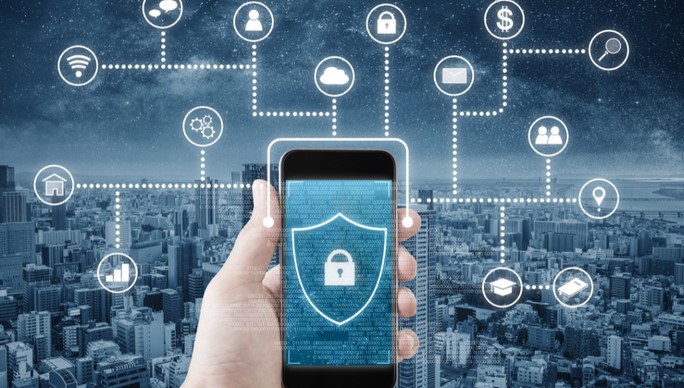
In a world where smartphones serve as digital wallets, workstations, and personal communication hubs, mobile threat defense has become a critical component of modern cybersecurity strategies. Mobile devices now store sensitive personal data, corporate credentials, and access to cloud services, making them attractive targets for cybercriminals. This article introduces the concept of real-time mobile threat defense, explains the evolving threat landscape, and outlines how individuals and organizations can protect smartphones against increasingly sophisticated attacks.

1. The Expanding Mobile Threat Landscape

Smartphones were once considered relatively secure compared to traditional computers, but that assumption no longer holds true. As mobile operating systems have grown more powerful and connected, attackers have followed closely behind. Modern mobile threats extend far beyond simple malware infections and now include phishing attacks, malicious applications, network-based exploits, and operating system vulnerabilities.

One of the most common attack vectors is social engineering. Fraudulent messages, emails, and fake notifications are designed to trick users into revealing credentials or installing malicious software. Because smartphones are used frequently and often on the go, users may act quickly without scrutinizing links or permissions.

Another growing risk is insecure network usage. Public Wi-Fi networks, while convenient, can expose devices to man-in-the-middle attacks and data interception. Attackers can exploit unencrypted connections to steal sensitive information or inject malicious content. Additionally, compromised or poorly designed mobile applications may leak data or introduce hidden vulnerabilities.

For businesses, the rise of bring-your-own-device (BYOD) policies has further complicated the threat landscape. Personal devices accessing corporate systems blur the boundaries between private and professional data, increasing the risk of unauthorized access and data leakage. These factors highlight the need for proactive and continuous mobile security measures.

2. Core Principles of Mobile Threat Defense

Mobile threat defense solutions are designed to identify, prevent, and respond to threats in real time. Unlike traditional security tools that rely solely on known signatures, modern mobile security approaches focus on behavior analysis and contextual awareness.

Real-Time Detection and Response

Real-time monitoring is a defining characteristic of effective mobile security. By continuously analyzing device behavior, network activity, and application interactions, threat defense systems can identify suspicious patterns as they occur. This enables immediate action, such as blocking a malicious connection, alerting the user, or isolating a compromised application.

Machine learning and artificial intelligence play a significant role in this process. These technologies allow security systems to adapt to new threats by recognizing anomalies rather than relying only on previously identified malware. As a result, even zero-day attacks can be detected before they cause significant damage.

One Subheading: Device, Network, and Application Protection

Comprehensive mobile threat defense addresses risks across three primary domains. Device-level protection focuses on operating system integrity, detecting rooting or jailbreaking attempts, and identifying unauthorized configuration changes. Network-level protection monitors connections to identify unsafe Wi-Fi networks, phishing domains, or suspicious traffic patterns.

Application-level protection examines the behavior and permissions of installed apps. By analyzing how apps access data, communicate externally, and interact with system resources, security tools can flag potentially harmful applications—even if they appear legitimate on the surface. Together, these layers form a holistic defense strategy that adapts to changing conditions in real time.

3. Benefits for Individuals and Organizations

The value of mobile threat defense extends beyond simple malware prevention. For individual users, it provides peace of mind by safeguarding personal information such as financial data, messages, and digital identities. Alerts and guidance help users make safer decisions, such as avoiding risky networks or removing suspicious apps.

For organizations, mobile security is essential for protecting intellectual property and maintaining regulatory compliance. Real-time threat defense reduces the risk of data breaches, which can result in financial loss, legal consequences, and reputational damage. Integration with enterprise mobility management systems allows businesses to enforce security policies without compromising user productivity.

Another significant benefit is visibility. Mobile threat defense solutions provide insights into device health, threat trends, and user behavior. This information helps security teams identify systemic weaknesses and improve overall security posture. Over time, these insights support more informed decision-making and better risk management.

As mobile technology continues to evolve, so will the threats targeting it. The growing use of mobile payments, biometric authentication, and connected devices increases both the value of smartphones and the potential impact of successful attacks. Proactive security measures are therefore not optional but essential.

In an era where smartphones are central to both personal and professional life, mobile threat defense plays a vital role in protecting digital assets in real time. By combining continuous monitoring, intelligent threat detection, and multi-layered protection, modern mobile security solutions address the unique risks faced by mobile devices. As threats become more advanced and pervasive, investing in effective mobile threat defense is key to ensuring safe, resilient, and trustworthy smartphone usage in an increasingly connected world.

Portable Scanners for Work and Travel Convenience

Source:https://cdn.thewirecutter.com

In an era defined by mobility and digital workflows, portable scanners have emerged as essential tools for professionals, students, and travelers who need fast, reliable document digitization without being tied to an office. As remote work, freelancing, and business travel continue to grow, the ability to capture documents anytime and anywhere has become a practical necessity rather than a luxury. This article explores how modern portable scanning solutions are reshaping productivity, the technology behind them, and why they represent a smart investment for people on the move.

1. The Shift Toward Mobile Document Management

The traditional office environment once revolved around bulky equipment, fixed desks, and centralized document handling. Today, work happens across airports, hotels, client sites, shared workspaces, and home offices. This shift has created a strong demand for tools that support flexible and efficient document management.

Portable scanning solutions address this need by enabling users to convert physical documents into digital formats instantly. Contracts, receipts, identification documents, handwritten notes, and business forms can all be captured and stored electronically within seconds. This capability reduces reliance on paper, improves organization, and ensures that important information is always accessible.

Another key driver behind adoption is the growing emphasis on paperless workflows. Digital storage not only saves physical space but also simplifies sharing, searching, and archiving documents. For travelers, the ability to digitize paperwork on the spot minimizes the risk of loss or damage. For professionals, it supports faster collaboration and smoother compliance with digital record-keeping standards.

Advancements in miniaturization and battery technology have further accelerated this trend. Modern scanning devices are lightweight, compact, and energy-efficient, making them easy to carry in a backpack or briefcase. As a result, mobile document management has become a realistic and sustainable option for a wide range of users.

2. Key Features That Enhance Work and Travel Efficiency

The effectiveness of portable scanning solutions lies in their thoughtful design and feature sets, which prioritize convenience without sacrificing quality. Understanding these features helps users choose the right device for their specific needs.

Compact Design and Connectivity

Portability begins with form factor. Slim profiles, foldable components, and durable materials make modern scanners suitable for frequent travel. Many devices are designed to fit alongside laptops or tablets, ensuring minimal additional weight.

Connectivity is equally important. Wireless options such as Bluetooth or Wi-Fi allow scanned documents to transfer directly to smartphones, tablets, or cloud storage platforms. USB connectivity remains valuable for users who prefer direct, cable-based transfers. This flexibility ensures compatibility with various devices and operating systems, supporting seamless integration into existing workflows.

One Subheading: Image Quality, Speed, and Intelligent Processing

Despite their small size, modern portable scanners deliver impressive image quality. High-resolution sensors and advanced optics ensure that text remains sharp and images are accurately captured. Automatic color correction, de-skewing, and noise reduction further enhance scan clarity.

Speed is another critical factor, especially for professionals handling multiple documents. Many devices can scan several pages per minute, allowing users to process paperwork efficiently even in time-sensitive situations. Some models support duplex scanning, capturing both sides of a document in a single pass.

Intelligent processing features add significant value. Optical character recognition (OCR) enables scanned documents to become searchable and editable, improving usability and long-term organization. File format flexibility—such as PDF, JPEG, or text-based outputs—ensures compatibility with various applications and compliance requirements.

3. Practical Use Cases and Long-Term Benefits

The versatility of portable scanning technology makes it suitable for a wide range of real-world scenarios. Business travelers can digitize contracts, invoices, and expense receipts while on the road, reducing administrative backlog upon returning to the office. Consultants and field professionals can capture client documents immediately, ensuring accuracy and timely follow-up.

Students and researchers benefit from the ability to scan notes, book excerpts, and reference materials without carrying heavy folders or risking damage to original documents. Remote workers can maintain organized digital records that support collaboration and version control across distributed teams.

From a long-term perspective, these tools contribute to better data security and compliance. Digitized documents can be encrypted, backed up, and access-controlled, reducing the risk associated with physical storage. Environmentally, reduced paper usage aligns with sustainability goals, an increasingly important consideration for organizations and individuals alike.

Cost efficiency is another notable benefit. While there is an initial investment, the reduction in printing, storage, and document handling costs often leads to long-term savings. Time saved through faster document processing also translates into improved productivity and reduced operational friction.

As digital transformation continues to shape how work is conducted, the role of mobile document capture will only grow. Future developments are likely to include deeper integration with cloud services, enhanced automation, and smarter data classification, further streamlining document workflows.

For professionals and travelers navigating a fast-paced, digital-first world, portable scanners offer a practical solution that bridges the gap between physical documents and modern workflows. By combining compact design, intelligent features, and versatile use cases, these devices support productivity, organization, and flexibility wherever work takes place. As mobility becomes a defining feature of professional life, portable scanning technology stands out as a reliable companion for efficient and secure document management.

Quantum Secure Blockchain: The Next Level of Security

Source:https://qse.group

As digital systems become more interconnected and data-driven, the convergence of emerging technologies is redefining how security is designed and enforced. Quantum secure blockchain is an innovative concept that addresses one of the most pressing concerns of the digital age: how to protect decentralized systems in a future where quantum computers can break today’s cryptographic standards. This article explores the idea behind quantum-secure blockchain, explains how it differs from traditional blockchain security models, and outlines why it is expected to play a critical role in safeguarding digital trust in the coming decades.

1. The Security Challenge Facing Traditional Blockchain

Blockchain technology is widely valued for its decentralization, transparency, and resistance to tampering. At its core, blockchain relies on cryptographic algorithms—such as public-key cryptography and hashing functions—to secure transactions, verify identities, and maintain data integrity. These algorithms are currently considered secure against attacks from classical computers.

However, the rise of quantum computing introduces a fundamental challenge. Quantum computers leverage principles such as superposition and entanglement to solve certain mathematical problems exponentially faster than classical machines. Algorithms like Shor’s algorithm threaten the cryptographic foundations used by many existing blockchain networks, particularly those based on elliptic curve cryptography and RSA.

If large-scale, fault-tolerant quantum computers become available, attackers could theoretically forge digital signatures, manipulate transactions, or compromise wallets without needing network consensus. Even if such machines are not yet widely accessible, data recorded today could be harvested and decrypted in the future—a concept known as “store now, decrypt later.” This risk has made future-proof security a strategic priority rather than a theoretical concern.

As a result, blockchain developers and security researchers are actively exploring new models that can withstand both classical and quantum attacks. This exploration has given rise to the concept of quantum-secure blockchain architectures.

2. Foundations of Quantum Secure Blockchain Design

Quantum-secure blockchain refers to blockchain systems that are designed to remain secure even in the presence of powerful quantum adversaries. Rather than relying on a single solution, this approach combines multiple cryptographic and architectural innovations.

One foundational element is post-quantum cryptography. These are cryptographic algorithms specifically designed to resist quantum attacks. Unlike traditional public-key systems, post-quantum schemes are based on mathematical problems that are believed to be hard for both classical and quantum computers, such as lattice-based, hash-based, and multivariate polynomial problems.

Another important element is cryptographic agility. Quantum-secure blockchains are built with the ability to upgrade cryptographic algorithms without disrupting the network. This flexibility ensures that as new threats emerge or standards evolve, the system can adapt without requiring a complete redesign.

Beyond cryptography, quantum-secure designs also focus on key management and identity verification. Decentralized identity systems, combined with quantum-resistant signatures, reduce reliance on long-lived keys that could be compromised in the future. Short-lived credentials and dynamic authentication mechanisms further limit exposure.

One Subheading: Quantum Communication and Consensus Enhancement

An emerging area within quantum-secure blockchain design is the integration of quantum communication principles. Quantum key distribution (QKD), for example, allows two parties to exchange encryption keys with provable security guaranteed by the laws of physics. Any attempt to intercept the key alters its state, alerting participants to potential tampering.

While QKD is not yet practical for large-scale public blockchains, hybrid models are being explored. These models combine classical blockchain networks with quantum-secured communication channels for high-value nodes or inter-chain communication. Additionally, research is underway to enhance consensus mechanisms by incorporating quantum randomness, which can improve fairness and resistance to manipulation.

Although these approaches are still in development, they illustrate how quantum technologies can strengthen blockchain security rather than undermine it.

3. Use Cases and Long-Term Impact

The adoption of quantum-secure blockchain is expected to begin in sectors where data integrity and long-term confidentiality are paramount. Financial institutions, for example, handle transactions and records that must remain secure for decades. Transitioning to quantum-resistant blockchain systems helps ensure that historical financial data remains trustworthy even as computing capabilities advance.

Government and defense organizations are another key area of application. Secure identity management, voting systems, and classified data sharing all require protection against future cryptographic threats. A quantum-secure blockchain can provide transparent yet tamper-resistant recordkeeping without relying on centralized authorities.

Healthcare and intellectual property management also stand to benefit. Medical records, research data, and patents often need long-term protection against unauthorized access and manipulation. Blockchain systems enhanced with quantum-resistant security can preserve data integrity while enabling controlled access across organizations.

From a broader perspective, quantum-secure blockchain represents a shift toward proactive security design. Rather than reacting to breaches after they occur, systems are being engineered with future threats in mind. This forward-looking approach aligns with the increasing lifespan of digital data and the growing cost of security failures.

However, challenges remain. Post-quantum cryptographic algorithms can be more resource-intensive, increasing computational and storage requirements. Balancing security with scalability and performance will be essential for widespread adoption. Standards development, interoperability, and education will also play crucial roles in ensuring smooth transitions.

The concept of quantum secure blockchain represents a critical evolution in how decentralized systems are protected against emerging threats. By combining post-quantum cryptography, adaptable architectures, and innovative communication models, this approach aims to preserve trust in blockchain networks well into the quantum era. As quantum computing advances from theory to reality, quantum-secure blockchain will serve as a foundational technology for safeguarding digital assets, identities, and transactions in a future defined by unprecedented computational power.